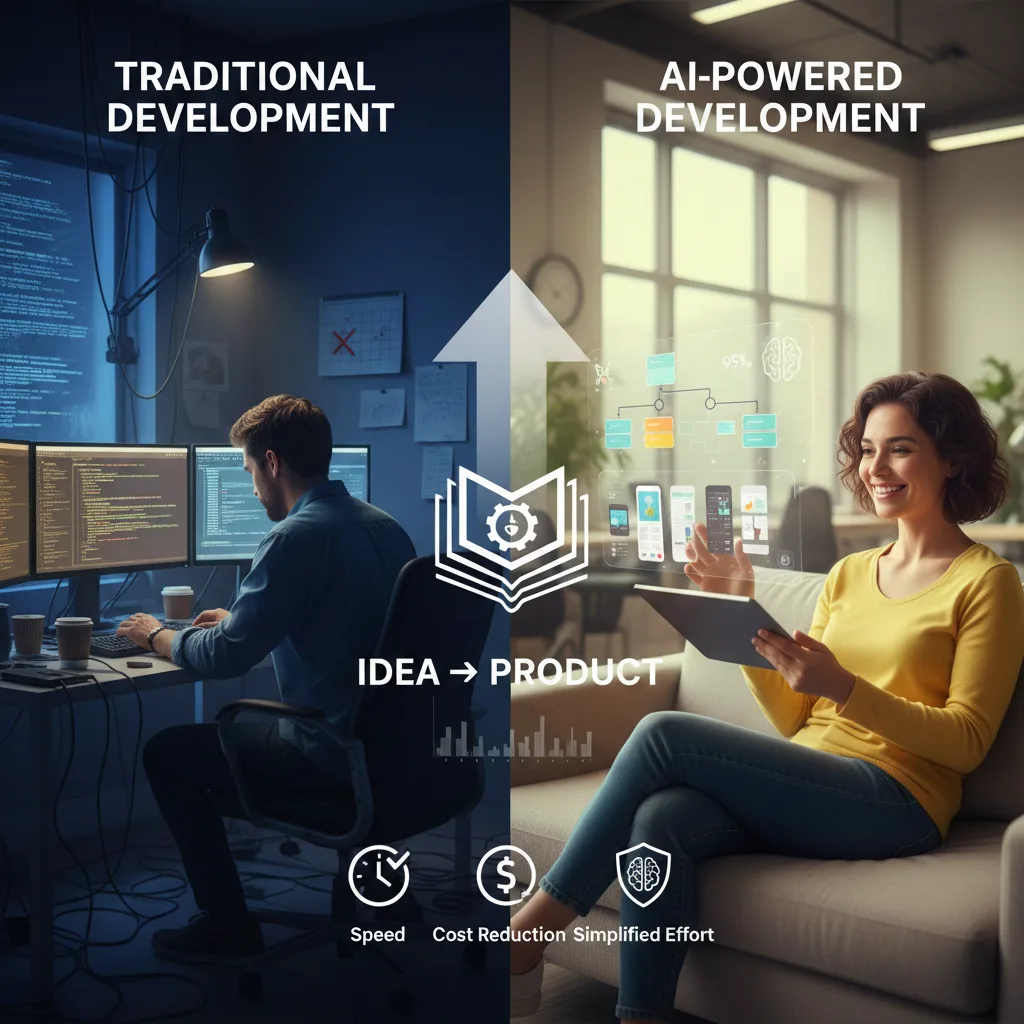
This blog explains how AI-powered tools can simplify website and app development for non-developers, founders, and growing teams. It shows how these tools work in real-world situations, when they are most beneficial, and how to pick the best option by using objective comparatives, side-by-side.
Key Takeaways
AI-driven builders let people create apps and websites without needing coding skills.
Different platforms have different objectives, ranging from MVPs and internal toolkits
AI-powered workflows cut down on the cost, time, and development efforts
Comparison platforms aid in avoiding costly trial-and-error choices
Introduction
Got an idea for a website or app, but feel stuck the moment development comes up? You’re not alone. Many strong ideas stall at the same point. Not because they lack value, but because turning them into a working product feels expensive, slow, or locked behind technical skills.
AI-powered toolsHere’s the thing. The way digital products are built today looks very different from even a few years ago.
Did you know? Industry research from no-code and product development studies shows that AI-assisted tools now help teams launch usable digital products in weeks instead of months. This change has lowered early development costs and reduced the need to hire engineers at the idea stage. As a result, founders, freelancers, and internal teams can test ideas faster and with far less risk.
An AI App Builder allows you to create websites or applications using prompts, visual logic, and automation rather than writing code line by line. You focus on what the product should do. The platform handles structure, workflows, and interfaces behind the scenes.
Before we go deeper, here’s what you’ll gain from this guide.
Table of Contents
What an AI-Powered App Builder Actually Does
How AI Is Changing Website and App Creation
Core Features That Matter in Modern Builders
AI-Driven Websites vs Traditional Development
Building Mobile Apps with AI-Based Platforms
How Comparison Platforms Help You Choose Smarter
Real-World Use Cases and Practical Experiences
Frequently Asked Questions
What an AI-Powered App Builder Actually Does
AI-powered builders use automation, logic generation, and natural language input to turn ideas into working digital products. Instead of manually configuring every rule or screen, you guide the system through intent and structure.
AI-powered no-code development in practice
Most platforms follow a similar pattern:
Prompt-based layout generation
Automatic database and workflow setup
Pre-built interface components
Logic and integrations managed by AI
What this really means is fewer technical blockers. You describe what you want to build. The system creates a working foundation that you can adjust visually.
In real usage, this approach works well for people who care more about outcomes than technical setup. We often see early-stage teams move from concept to testable product without touching a code editor.
How AI Is Changing Website and App Creation
Traditional development requires time, budget, and specialist skills. AI-driven platforms shift that model by making creation faster and more accessible.
Automated app development benefits
Product launches faster and without the need for long build cycles
Lower reliance on developers in the early stages
It is easier to test and iterate
Foundations that allow for the growth of the future
What this means is a degree of flexibility. Teams are able to test ideas prior to making big commitments to budgets. Internal teams can build tools without waiting in development queues.
Build faster. Launch smarter. Skip the technical headaches.
Core Features That Matter in Modern Builders
Not all platforms offer the same value. Some prioritise speed. Others focus on flexibility or scale.
AI app builder features to evaluate
Visual editors supported by AI logic
Workflow automation for actions and data
Backend data handling without manual coding
Integration with external tools
Deployment and hosting options
The strongest platforms balance automation and control.
Too much automation could feel restricting. Insufficient automation will negate the time-saving benefits. The purpose of your application determines the best balance.
This is typically the main reason why tools work well in demos, but not in real-world projects.
AI-Driven Websites vs Traditional Development
Choosing between AI-powered tools and traditional development depends on goals, scale, and timelines.
For MVPs and internally-developed tools. AI-driven choices typically win due to speed and efficiency.
Traditional builds remain important when it comes to complex systems. However, for many projects in the early stages, AI-driven design removes any friction and allows teams to remain focused.
Building Mobile Apps with AI-Based Platforms
Mobile app development no longer requires separate Android or iOS expertise.
AI Apps for Android and cross-platform use
Build once and deploy across platforms
Automatic layout adjustment for different screens
Backend logic without manual coding
Faster testing cycles
This is where an AI App Builder becomes especially practical. Instead of managing multiple builds, you work from one interface and publish across platforms.
For small teams, this reduces complexity and keeps projects moving without delays.
How Comparison Platforms Help You Choose Smarter
With dozens of tools available, choosing blindly often leads to wasted time and poor outcomes. Comparison-focused platforms make decisions clearer.
AI builder comparison platforms explained.
Feature-by-feature breakdowns
Transparent pricing views
Use-case alignment
Practical suitability
This is where AI Builder Battle plays an important role. AI Builder Battle provides objective, deep-dived comparisons and reviews on AI-powered tools for development, helping entrepreneurs, developers, and businesses make informed decisions based on the real needs, not on sales pitches.
Instead of guessing, you compare tools side by side and choose with confidence.
Real-World Use Cases and Practical Experiences
AI-powered builders have been utilized across various sectors.
Real-life AI app building examples
Founders launching MVPs without engineering teams
Freelancers delivering client projects faster
Internal tools built without developers
Product managers testing ideas before full builds
Across many comparisons, one theme appears often:
AI-assisted development reduces friction between ideas and execution.
That reduction keeps momentum alive and helps teams avoid unnecessary delays.
The Smarter Way to Turn Ideas Into Digital Products
An AI App Builder removes traditional barriers between concepts and their implementation. When you combine it with reliable platform for comparison, such as AI Builder Battle, you get clarity and control of your options. You can avoid making mistakes and instead focus on what is important to build.
Stop guessing. Start building smarter.
Choose the tool that fits your website or app goals with confidence by comparing AI-powered development platforms on AI Builder Battle.
Frequently Asked Questions
Is an AI app builder suitable for beginners?
Yes. Users are guided through prompts and visual tools on most platforms, so they are accessible from the very beginning.
Can AI-built apps scale as a business grows?
Many platforms support growth, but long-term needs should be reviewed before committing fully.
Are AI-powered websites SEO-friendly?
Most tools allow SEO control. Results depend on how content and structure are managed.
What’s the difference between no-code and AI-driven builders?
No-code relies on manual setup. AI-driven tools automate logic using intent.
Do AI tools replace developers completely?
No. They reduce early dependency, but advanced systems still need developers.